
 Sue King
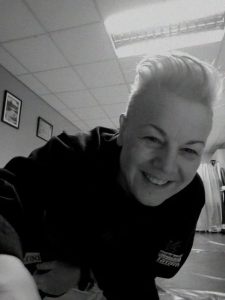 From a very young age, I learned that finding your place in the world can mean having to stand your ground long before you understand why. I was five when I first felt it, that sense of being different, of being questioned.
I was bullied as a child.
“You look like a boy.”
“Why haven’t you got a mum?”
Those words land heavily when you’re that young. They stay with you, even when you don’t yet have the language to process them. I didn’t just feel different, I was made to feel wrong, as though simply existing outside someone else’s expectations needed explaining. With short hair and a life that didn’t fit neatly into other people’s ideas of normal, I learned early how exposed a child can feel when they don’t quite belong.
I didn’t have answers then. I just knew I had to keep finding my way forward.
As a teenager, I found Jujitsu. It gave me something solid to hold onto, discipline, structure, and a place where effort mattered more than appearance. But even there, the challenges followed me. It was a male-dominated space, and I was young, short, and often underestimated. That meant working harder, not out of defiance, but because consistency and quiet commitment were the only ways forward.
I learned early that skill speaks over time, but time has to be earned.
Later, as a teacher, those challenges shifted rather than disappeared. There were moments of being quietly dismissed, times when it was clear that some people would rather be taught by a male instructor than a woman. Nothing was said outright, but the message was there all the same. I stayed, taught, learned, and kept showing up, not to prove a point, but because the work mattered.
None of this is shared with bitterness. It’s simply part of the road I’ve walked, and it has shaped the way I teach, listen, and lead.
With time, steady effort begins to leave its mark. Perspectives soften. Understanding grows. Opportunities appear where once there were none. Not everything changes, but enough does to remind you that patience and persistence carry their own weight.
Still, the path never becomes effortless. Each stage brings its own tests, and ease is never guaranteed. What experience teaches is not how to avoid difficulty, but how to move through it without losing yourself. You learn to act without waiting for permission, to adapt rather than resist, and to carry on even when the landscape feels uncertain.
So you continue. You return to the mat. You remain a student. You adjust, refine, and grow, not in pursuit of perfection, but in commitment to the practice itself.
Along the way, there are people, often unseen and rarely acknowledged, who stand quietly behind you. They don’t shout the loudest or seek recognition, but their influence runs deep. They challenge you when it matters, offer support without condition, and encourage you to keep refining yourself when it would be easier to stop. Their belief steadies you, even when your own feels tested, and their presence reminds you that you’re not walking alone.
That quiet support has carried me more than I ever realised at the time.
So I keep going. Not to prove anything. Not to fight anyone or change minds. I continue because the path itself has meaning. Showing up, staying honest, and moving forward with resilience and purpose is enough.
The path reveals itself through practice.